
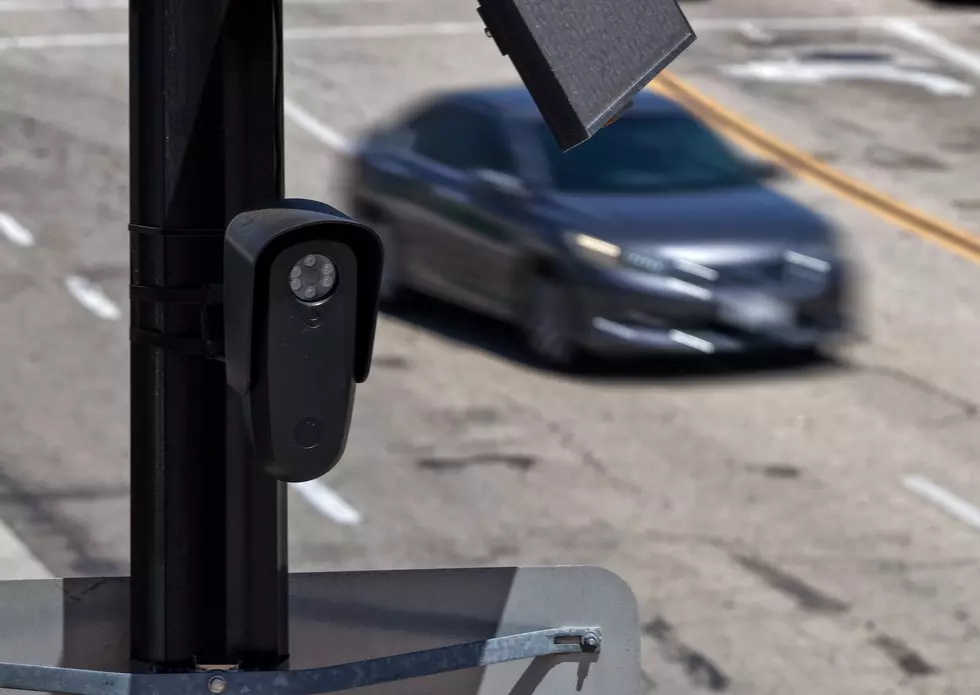
Flock Cameras Have Binghamton Divided: What Drivers Need to Know
Drive through Binghamton, and you've probably passed a Flock camera without noticing it. One resident recently told City Council she counted 19 of them on her way to the meeting where she was speaking out against them.
That is the tension at the center of this technology. Some residents want the cameras gone entirely. Others point to cases where they have already helped bring people home. Both things are true here, in our own community, right now.
I want law enforcement to have tools that help recover a stolen car or find a missing child. I also do not love the idea of a database somewhere logging every trip I take. If you feel that same pull in two directions, there is now a way to check whether your own plate has ever come up in a search.
How Binghamton Drivers Can Check Their Own Flock Search History
A website called Have I Been Flocked lets drivers enter a license plate number and search publicly obtained Flock audit logs to see whether that plate has ever been manually queried inside the system. The site's FAQ page states that it does not save, store, or log the plate numbers people search. The lookup runs, and the entry is discarded immediately afterward.
A result will not tell you whether a Flock camera has ever photographed your vehicle, only whether someone using the platform typed your plate into a search. Being searched does not mean you were suspected of anything, and the database is incomplete, since only some agencies release their logs. A clean result does not prove your plate was never looked up, only that no record of it has surfaced yet.
What the Cameras Collect
Flock cameras are automated license plate readers that photograph the plate, color, make, model, direction of travel, and the exact date, time, and location of every vehicle that passes, not just vehicles connected to a crime. Once that data is pooled across a network of cameras, it can reveal a vehicle's travel patterns over time, including visits to health centers, places of worship, protests, immigration clinics and gun shops.
A Broome County Case Shows the Benefit
In late June, the Broome County Sheriff's Office responded to a stolen vehicle report on Porter Avenue in the Town of Fenton. Deputies matched security footage of two juveniles to separate active missing-persons cases, and Flock license plate readers picked up a hit on the stolen vehicle near Chenango and Bevier streets in Binghamton, leading deputies to the two teens and the recovered car. It is exactly the kind of outcome supporters point to when they argue the cameras are worth keeping.
Why Binghamton City Council Wants the Contracts Gone
That same month, more than a dozen residents urged the council to end the city's use of ALPRs entirely, and the council's Municipal Affairs Committee heard competing views from a Flock representative, a policing researcher from NYU's Policing Project, and Binghamton Police Chief John Ryan.
City Council followed up by passing a resolution in early August calling on Mayor Jared Kraham to terminate Binghamton's Flock contracts. Council President Michael Dundon said the current terms do not serve residents, adding that people in Binghamton should not be subject to surveillance wherever they go.
Binghamton operates under two separate Flock contracts, part of a wider network of close to 300 automated license plate readers in the region when Flock and Motorola systems are combined.
Mayor Kraham Says the Cameras Are Staying
Mayor Kraham has been clear that Flock is not going away. He has said he takes privacy concerns seriously but believes the cameras run on secure databases and have already helped solve crimes, pointing to the stolen vehicle recovery in Fenton as evidence and framing the cameras as an officer safety issue as much as a public one.
City leaders have drawn one firm line already. Binghamton passed legislation barring city personnel, funding or resources from assisting federal immigration enforcement, and Chief Ryan has said the department does not share Flock data with ICE for that reason. It is not yet clear whether Broome County's separate systems follow the same rule.
Misuse Elsewhere Fuels the Skepticism
Concerns about oversight are not abstract. In August, Mooresville, North Carolina, police officer Elizabeth Snowman was arrested after an internal audit found she had accessed Flock data 31 times to track her boyfriend's former wife, with at least two searches run while she was off duty. Cases like that are part of why Binghamton residents keep asking who can search the database, what reason they need to give, and who checks that the reason is real.
Flock Is Rolling Out New Rules Nationwide
Flock Safety CEO Garrett Langley recently announced changes taking effect January 1 for every law enforcement customer, including any local agency using the system. Agencies will be required to use an auditing tool that flags unusual search activity and can lock a user out pending review, and the company is cutting its standard data retention window from 30 days to seven. The American Civil Liberties Union called the shorter retention period a step in the right direction, while still arguing the broader system leaves too much power in police hands.
New York does not currently have a statewide law capping how long agencies can hold onto license plate data. Several bills addressing ALPR retention and data sharing, including Senate Bill S9890, remain in committee in Albany. In the meantime, Binghamton's current Flock contract retains data for 30 days before automatic deletion, a limit set locally rather than by the state.
A Debate That Is Already Ours to Have
This is not a hypothetical policy question for some other city to sort out. Binghamton already has cameras up, a mayor defending them, a council pushing back, and residents showing up to meetings to say they have had enough.

A camera that helps find a missing teenager is a genuine good. A database that can be misused by the wrong person with access is a genuine risk. Both are true in Binghamton at the same time, and the answer to how we balance them is still being written at City Hall.
Flock Announces 12 Big Changes to Their Policies
Gallery Credit: Chris Cardenas
Confirmed Flock Safety Communities In New York
More From 98.1 The Hawk


